
More for Children
A transformative, long-term, research project with the aim of reducing child poverty and scaffolding well-being for all children in Australia.
The first phase of More for Children is being undertaken in partnership with the Paul Ramsay Foundation and focuses on rights-based research with children to understand their experiences of poverty.
The research will develop a suite of indicators designed to identify the underlying causes of poverty and to inform responses at local, state/territory, and national levels.

We believe it is not possible to ensure well-being for all children in Australia while child poverty continues – and it is not possible to end child poverty unless we can understand and measure poverty in a child-centred way.
More for Children is a program of transformative research that aims to create genuinely child-centred societies. More for Children focuses on building our understanding of children’s experiences of poverty in Australia, refine the MOR Framework for assessing and measuring poverty, and support policy makers to design child-centred policies to reduce poverty.
At the heart of More for Children is rights-based research with children – and their families and communities – to bring their voices to the fore.


Rights Based Research with Children
The More for Children research team is working with two existing place-based initiatives in regional Tasmania and Victoria.
Our approach is informed by participatory methods in the form of child centered research workshops allowing the researchers to gain an understanding of what makes life good for children and what makes life tough for children.
Research workshops with children started in late 2022 and will continue throughout 2023. We are undertaking research with 50 children aged between 6-16, family members and community stakeholders in each location to understand their experiences of poverty, in order to contribute to solutions.


Understand Child Poverty
The findings from our research will contribute to understanding the nature of poverty for children in Australia.
Our research suggests that while income always matters, child poverty in Australia is multidimensional. We have developed a three-dimensional framework based on what children have told us in this research, and previously, about how poverty impacts on their lives: the MOR Framework. The MOR framework can be used to understand child poverty and to inform policy responses and services.
It is not possible to ensure the wellbeing of all children in Australia while child poverty continues.


Tools for Policy Makers and Service Providers
The long-term goal of More for Children is to translate the findings of the first two years of research into detailed policy guidance. This phase will be undertaken in deep consultation with key partners in government, as well as community partners.


Reduce Child Poverty and Scaffold Well-being
The long-term vision of the More for Children project is to build a child-centred, rights-based, rigorous evidence base that will allow child poverty to be assessed, measured, and ultimately eliminated.
Only once child poverty is ended can well-being for all Australian children be achieved.

More for Children: Child-Centred Indicators of Multidimensional Poverty More for Children Discussion Paper 1
Discussion paper on the development of child-centred indicators of multidimensional poverty based on the More for Children research. Click here to download the...

Protected: MfC Child Poverty Indicator Analysis
Password Protected
To view this protected post, enter the password below:

We should be looking at what we can add to children’s lives instead of what we take away
Prime Minister Anthony Albanese announced the government’s plan to introduce legislation to ban younger teens from social media.

More for Children Issues Paper 2: Housing
This issues paper focuses on what children told us about housing – and how their lives are impacted when housing is unaffordable, inadequate or insecure.
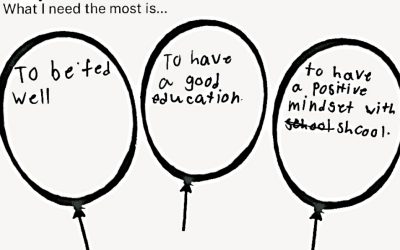
More for Children Issues Paper 4: Education
This issues paper focuses on what children told us about education and how learning in and out of school is impacted by poverty.

Shifting narratives about poverty in Australia
This is the final post of a 3-part series by Sharon Bessell and Cadhla O’Sullivan from the Children’s Policy Centre at ANU. Today’s post covers welfare policy narratives of individual blame and how they don’t reflect the reality of children’s lives.

‘The Missing Middle’ in childhood poverty and wellbeing indicators
This is the second post in a 3-part series focusing on childhood poverty and wellbeing indicators. Today Cadhla O’Sullivan, Megan Lang and Sharon Bessell highlight the gaps for children in the middle years, why this matters, and the importance of listening to children to understand their experiences of poverty.

Reducing poverty and improving wellbeing for all children: Where do we stand?
This is the first post in a 3-part series) by Sharon Bessell and Cadhla O’Sullivan from the Children’s Policy Centre at ANU. Today they identify some trends from their analysis of poverty and wellbeing.

More for Children: Children’s Experiences of Poverty in Australia
Bessell, S. and O'Sullivan, C. 2024. More for Children: Children’s Experiences ofPoverty in Australia, Canberra: The Children's Policy Centre, The AustralianNational University (PDF) More for Children: Children's Experiences of Poverty in Australia.
More for Children: Rights-based Methodology for Research with Children about Poverty
Bessell, S. and O'Sullivan, C. 2024. More for Children: Rights-based Methodology for Research with Children about Poverty. Canberra: The Children's Policy Centre, The Australian National University (PDF) More for Children: Rights-based Methodology for Research with...
Partners
More for Children is funded by the Paul Ramsay Foundation and is taking place in partnership with FamilyCare in
Shepparton, Victoria and Burnie Works in Burnie, Tasmania.


